

What was the Peasants’ Revolt?
The Peasants’ Revolt was a popular uprising that happened largely in the south-east of England in 1381 AD. Its name is misleading and at the time it was known as the Great Rising. Although ordinary people who worked the land took part, so did many others such as minor officials from villages, artisans, other townspeople and former soldiers. Far from being “mindless yokels”, they were often people with both aspirations for self-betterment and also for a more just society. The 2026 film ‘The Uprising’, based around the events of 1381 is creating increased interest in this fascinating period.


Why did it happen?
Medieval society was shaken up by the effects of the plague pandemic later know as the Black Death. Because labour was scarcer and land more plentiful, ordinary survivors saw a chance to better themselves and legally-unfree people sought to loosen feudal control by nobles and big landowners over their lives.
At the same time, people began to question the power of the Church and egalitarian preachers, such as John Ball, began to share new ideas about Christianity.


People were angry at perceived government corruption. The King at the time, Richard II was still a teenager and much of the real power was in the hands of the King’s uncle, John of Gaunt.
The immediate spark was the imposition of a third round, within a 4 year period, of an unfair tax known as a poll tax, to fund war with France. This burdened ordinary people more than the rich. Many people could not, or refused to, pay the extra tax. The authorities sent out parties to collect the tax owed, and things began to quickly boil over.

_(late_15th_C),_f.236r_-_BL_Royal_MS_14_E_IV.png)
The start of the revolt, Fobbing and Brentwood, Essex
One of the now lesser-known figures of the revolt was Thomas Baker of Fobbing (probably literally a baker by trade). A contemporary record calls him “the first mover” of the revolt. He and other villagers from the area were summoned to Brentwood to pay the missing money.
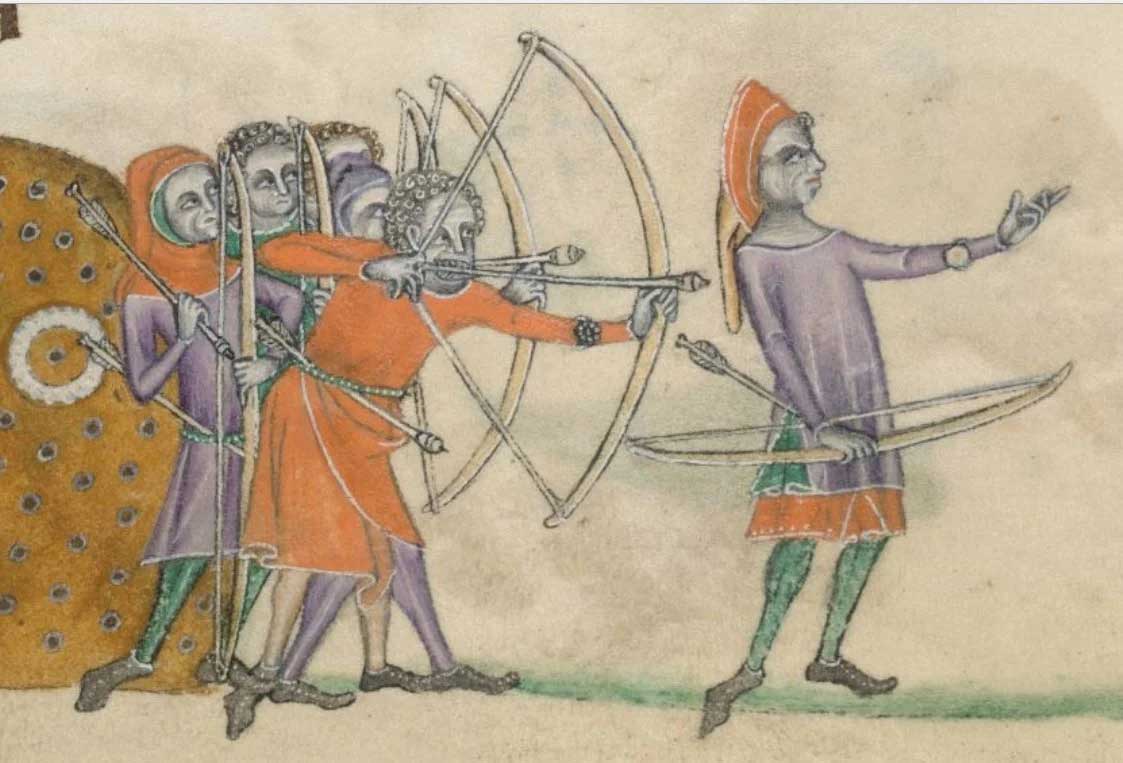
Instead, on 30 May 1381, Baker and the villagers, some armed with bows, violently clashed with the tax collectors under John Bampton and threw them out. Thomas Baker was later executed. He is commemorated by a 1980s memorial and a plaque at Fobbing. Brentwood now boasts a micropub named after the revolt.
The revolt spread across the south-east mainly in Essex and Kent, with Wat Tyler emerging as the main leader. There were many attacks on manor and court records as the rebels sought to destroy evidence of their tax or other obligations to the rich. Officials associated with the unpopular tax were also targets. Elements of the Essex and Kent rebels met up in the north of Kent early in June, with some Kentish rebels subsequently crossing in boats to aid the rising in Essex.
Rochester Castle, Kent
The formidable stronghold of Rochester Castle fell to the rebels between 3-6 June 1381 and was sacked. It’s thought that Wat Tyler established his leadership through his part in this action. The attack may have been triggered by the crowd attempting to free a man accused of being a runaway serf. The castle is now protected as a Grade I listed building and a scheduled monument.

Canterbury, Kent: the sack of the Archbishop’s palace
As the church was a major landowner and also taxed ordinary people, its institutions also became targets. In particular, the Archbishop of Canterbury Simon Sudbury was at the same time a Royal official (Lord Chancellor) and had proposed the hated new tax. Around 10 June, the rebels seized Canterbury and sacked the Archbishop’s Palace. Sudbury was however in London. The rebels began to march on the capital on 11 June.

Coggeshall, Essex: an attack on the Sheriff of the county
At Coggeshall on 6 June, the rebels attacked John Sewale, the Sheriff of Essex, and clerk of the exchequer Robert de Segynton, leaving them badly injured. In medieval times, the town grew wealthy from the wool trade and is still known for fine medieval and later timber-framed buildings.

Cressing Temple, Essex: targeting the Treasurer
At around the same time as the attack on Canterbury, 10 June, Essex rebels stormed a manor at Cressing Temple that was associated with Robert Hales, the King’s Treasurer (and a senior figure of the Hospitallers). The site was a storage depot for foodstuffs; supplies were taken and buildings destroyed. Two of the imposing medieval barns survive today.

Blackheath London, rebel camp-site
On their march on London, the rebels from Kent and London joined forces and made camp at Blackheath, which was then just outside the city. Here on 12 June, the egalitarian preacher John Ball held a famous sermon calling to end serfdom, containing the phrase “When Adam delved and Eve span, who then was the gentleman”. Essentially, he was saying that God had meant people to be social equals. Tradition has it that Ball had previously preached at John The Baptist church, Thaxted.


Greenwich, London: an aborted meeting
On 13 June, the young King Richard II went out to meet the rebels by boat at Greenwich but turned back feeling it was not safe.
Frustrated by the lack of progress, the rebels attacked targets in the city including Lambeth palace and the main prisons. The assault was accompanied by violence against foreign merchants, mainly Flemish.


Savoy Palace, the seat of John of Gaunt
They burned the Savoy Palace, situated between the Strand and the River Thames, because it was the home of John of Gaunt who had become identified with misrule and corruption. The site is now occupied by the Institution of Electrical Engineers.


The Tower of London stormed
While the King was away from the Tower of London, a group of rebels, some sources say under a woman named either as Johanna Ferrour or Joan Marchall, stormed the fortress and killed Simon Sudbury the Archbishop of Canterbury and Treasurer Robert Hales. The Tower is now a World Heritage Site.

Mile End: the King meets the rebels
On 14 June at Mile End, about a mile out eastward from Aldgate, King Richard II finally met the rebels. The King said that he would meet the demands of the rebels: including to abolish serfdom and fairer land rents, going so far as to sign charters to this effect.

.jpg)
Smithfield: the final showdown
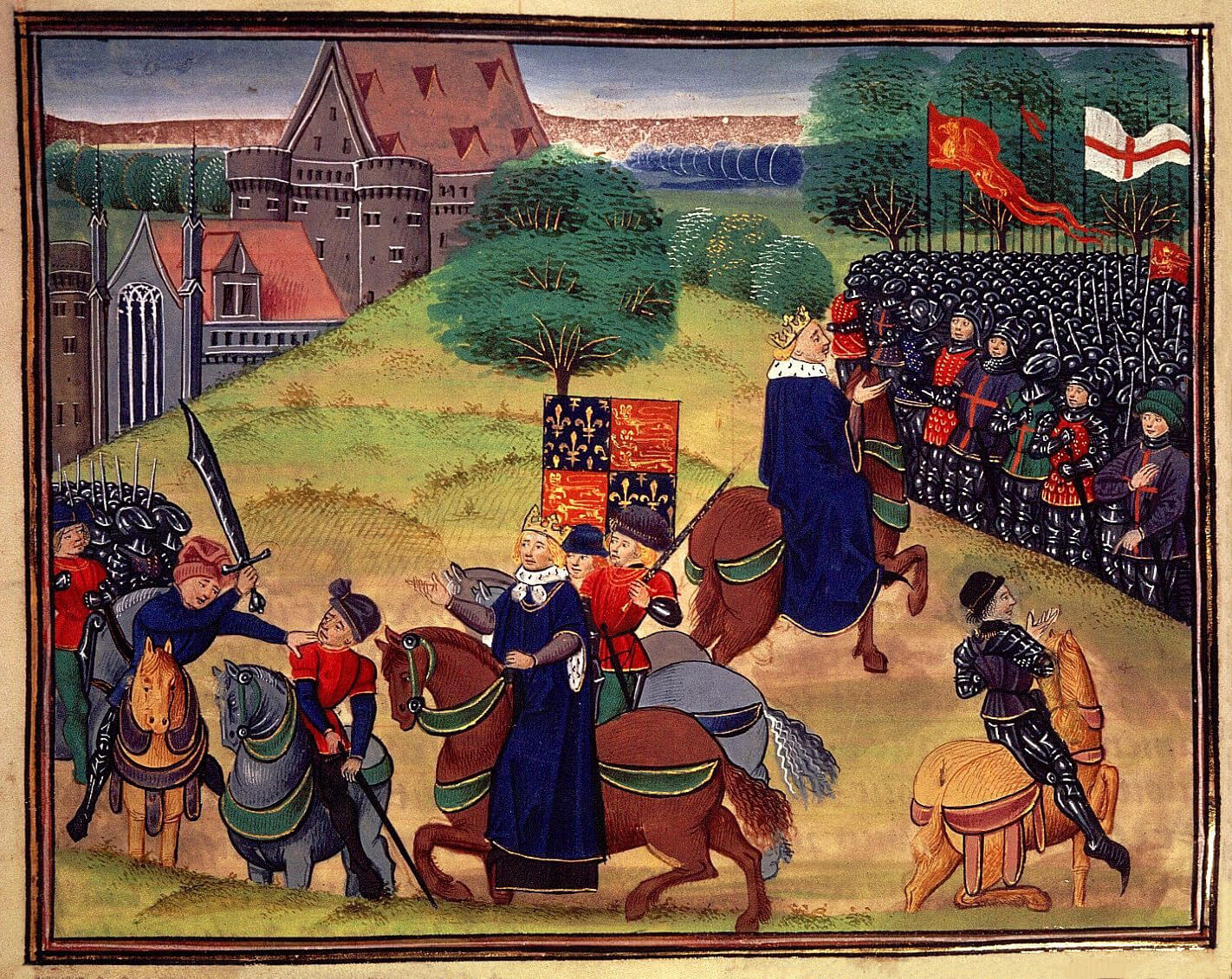
On 15 June the King and his followers met Tyler and the rebels once more, this time at Smithfield. The site was used as a livestock market and fair. Tyler appears to have tried to get more radical concessions from the King including drastic abolition of the nobility and reform of the church. He is further alleged to have greeted the King with a disrespectful “hail brother”, which drew an angry response from the Royal followers. Walworth, the mayor of London moved forward and struck Tyler down with a sword, some sources add that he was then stabbed by the King’s squire.
The King took control of the situation, convincing the crowd that he was now their leader. He persuaded them to disperse, promising that the existing charters would be honoured. Was this a chance response in the heat of the moment, or a planned assassination of Tyler?

The aftermath
Once the rebels had dispersed back to their homes, Richard went back on his word, which he said was given under duress, and a crackdown followed. A number of rebels were killed and their bodies left in the woods by St Albans. The leaders, like John Ball and Thomas Baker were hunted down and executed. However, the poll tax was abandoned and serfdom gradually died out due to the ongoing labour shortage.
King Richard II’s reign became unpopular and eventually in 1399 he was forced to abdicate. He was likely starved to death in Pontefract castle by his successor Henry Bolingbroke (the son of John of Gaunt), who reigned as Henry IV.
Over the 20th century and into the 21st century there have been commemorations of the uprising, including plaques at Highbury manor and at Smithfield and local memorials to the leaders including at St Albans, Colchester.


0 comments on “Historic Places Associated With The Peasants’ Revolt”