

Written by Nicky Hughes with input from Bronwen Stone.
Stained glass can be found all over England, most commonly as religious iconography in faith buildings but also in secular form. This extraordinary art – devotional, symbolic, narrative, commemorative – is so ubiquitous, it is almost hidden in plain sight.
Here we take a look at some of the most important, unusual and historic examples in England. Starting from the earliest fragments dating from around 1,300 years ago, we track its development over the centuries, to the iconoclastic Reformation of the 16th century AD, which presided over the wholesale destruction of most religious stained glass.

The beginnings of coloured window glass in Britain
It is believed that the first use of window glass in Britain, including coloured glass that archaeologists believe was imported, was by the Romans (43 to 410 AD). They used different techniques from the later medieval glass makers, producing small panels of more opaque glass to make up windows.
Later, when the Anglo-Saxons became Christian, they used coloured glass in their more important religious buildings such as at Monkwearmouth and Jarrow, Northumberland. They, like the Romans, used Continental glass imported as ‘chunks’, melting it down and reworking it. Excavations on former monastery sites in Northumbria unearthed hundreds of fragments indicating that stained glass may have been in use here as early as the 7th century AD.

How medieval stained glass was made
Making medieval stained glass windows was a supremely skilled craft. Different coloured glass sheets, probably from the Continent, were cut into rough pieces of a design by applying a hot iron to the surface; the edges then chipped to create a particular shape.
Glass painters applied paint made from a mix of iron or copper oxide, ground glass, gum arabic, and a wine or vinegar binder. Using animal hair brushes, they created detailing such as faces or drapery, in colours varying from grey-black to brown. Quills or needles were used to scratch the paint, creating texture before firing.


The pieces of glass were assembled on a flat surface; their edges fitted tightly together using H-profiled strips of lead (known as ‘cames’), which formed part of the design. Then the work was soldered to fix the design. The panels were tied to iron bars with wire within the window opening and soldered.

.jpg)
The lancet windows shown above are mostly made of uncoloured or white glass, known as grisaille, arranged in shapes (quarries) or painted with foliage and patterns, with insets of coloured glass.
Grisaille was a new technique used from the 12th to the 14th centuries. It was cheaper to create and allowed more light to enter the building.
The early 14th century saw another major innovation, silver stain. A silver nitrate compound (which gave stained glass its name) was painted on the surface of clear glass and, when fired, burned into the surface, producing a range of yellows and oranges.
This gave artists the ability to have more than one colour on a single piece of glass, revolutionising glass painting.
In addition, vitreous enamel paints were developed, also painted on clear glass and fired, producing colours such as blues, greens and purples, allowing for more complex designs.


Great medieval Gothic cathedrals
Stained glass as we think of it today found some of its greatest expression in the religious settings of medieval Gothic cathedrals such as Canterbury, York Minster and Wells.
Vividly coloured windows, illustrating Bible stories and the lives of saints, made sacred spaces atmospheric and spiritual. To the mainly illiterate faithful of the time, whether in cathedrals or parish churches, the light was divine, evoking awe and wonder, while the designs taught a Christian understanding of the world.

Medieval parish churches
Stained glass windows feature widely in medieval parish churches around the country.
The Fairford windows were painted largely by Barnard Flower, Henry VII’s master glass painter. They are rare survivors of the Reformation’s iconoclasm (see below), having been dismantled and hidden to avoid destruction.


Many stained glass windows in English parish churches have local significance.
St Neot, for example, was a 9th century hermit monk living in St Neot who performed miracles. The narrative window below shows the story of him bringing fishes back to life.
Miracle windows commemorating saints were common in parish churches and cathedrals.

Here in St Neot and elsewhere round the country, as imported glass was expensive, space was often given over to depictions of the wealthy parishioners who funded the windows. From the 14th century, English glass began to be used.
Named donors were often shown at the foot of panels, kneeling and praying, with images illustrating stories from the Bible and the lives of saints above. The Virgin Mary was commonly portrayed.

Stained glass in medieval civic and domestic settings, such as manor houses or castles, is far rarer than in religious buildings. Also a display of status and wealth, it often takes the form of portraits or heraldic devices like coats of arms.
A historically significant parish church window at St Leonards, Middleton, Lancashire was paid for by the local lord of the manor who led the Middleton Archers into battle at Flodden in 1513. It illustrates historical costume and long bow weaponry, as well as unusually naming each of the individual archers as they knelt in prayer before going into battle.

Reformation and iconclasm
For hundreds of years, Britain and the Continent shared a common Catholic liturgy; using Latin as the language of religion. But in the 16th century a religious revolution, the Reformation, swept Europe, challenging the doctrine of the Catholic Church, giving birth to Protestantism in Britain. Henry VIII (1491 to 1547) declared himself Supreme Head of the English Church.
During the Reformation, the rich and vivid decoration of Roman Catholicism in cathedrals and churches in England and Wales, from stained glass windows, to wall painting and shrines, was destroyed or desecrated; viewed as idolatrous and sacrilegious (including during the later English Civil War period 1642-1651).

Stained glass was replaced by unadorned plain glass and many church interiors were white-washed to obliterate murals.
Hundreds of religious houses were forcibly closed, most left to fall into ruin, after the King ordered the Dissolution of the Monasteries (1536-1541). Thousands of these stained glass windows were lost for ever.
Some were sold and installed in, for example, parish churches or private halls. Fashionable window schemes were retained by the crown. However, many were also discarded, the lead retrieved for recycling. These windows included the more unfashionable schemes such as grisaille, the overly religious (unsuitable for secular re-use) and windows depicting specific donors.


Following the seismic upheavals of the Reformation, the art of stained glass then largely fell out of favour for the next 2 centuries. It was not until the 18th century that illustrative windows were produced in any numbers.
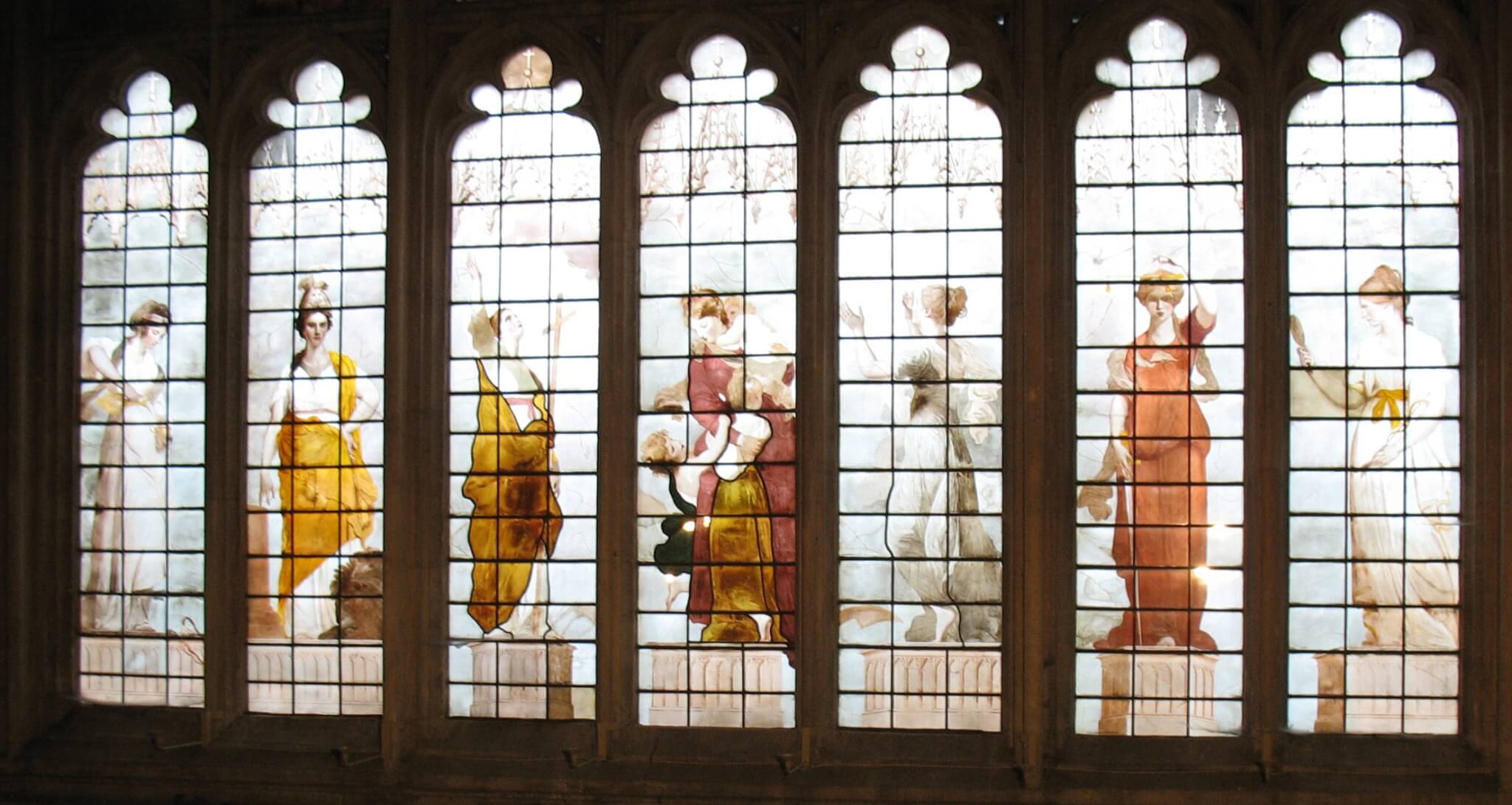

However, it was the hugely popular Gothic Revival of the Victorian era (1837 to 1901) that saw old skills and techniques relearned as stained glass become fashionable once again. We will cover this revival in a future blog.
Thank you so much for this beautifully illustrated article. The stained glass that remains is wonderful, especially at York Minster. It is a tragedy that so little English stained glass remains, but it helps us appreciate what does still exist.
No mention of the stained glass museum in Ely Cathedral one of the most important ecclesiastical sites in the UK? Or of the threatened closure of the Sunderland Glass museum?
I adore stained glass. Thank you for this article. The destruction of so much glass during the reformation was a cultural disaster. We must preserve the heritage we have left.